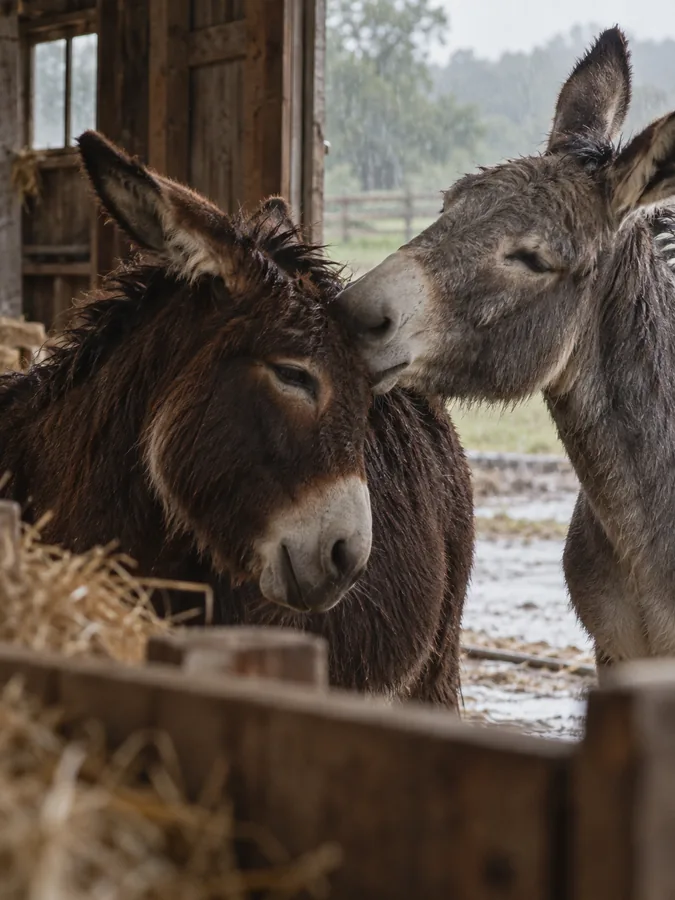
Ears
Forward, back or pinned.
For exampleEars raised toward a person signal interest. Ears laid back with the head lowered signal worry or fear.
Gentle, watchful and always humming, a herd animal who speaks softly and notices everything.
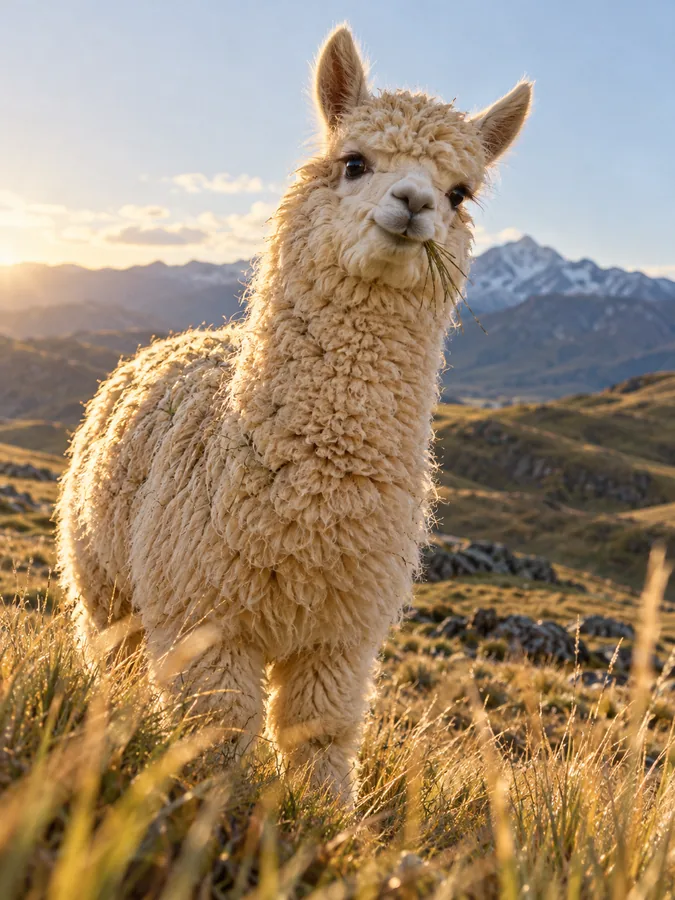
Alpacas are small South American camelids who live in close-knit herds and feel safest with their group in sight. They talk mostly through soft hums and a quiet language of ears, neck and tail.
As prey animals, they often show fear by going very still rather than struggling. Research on alpaca behaviour is still young, so FaunaVera reads them with extra care and tells you when its confidence is lower.
A few of the channels FaunaVera watches and listens to in every alpaca video, weighed together with context and checked against an alpaca-specific ethogram.
Forward, back or pinned.
For exampleEars raised toward a person signal interest. Ears laid back with the head lowered signal worry or fear.
Raised or lowered.
For exampleEars pinned back with the head raised and the tail out level can be a warning before spitting.
Down, raised or level.
For exampleA loose, lowered tail goes with interest. A slightly raised tail can go with fear.
Hums and alarm calls.
For exampleHums are contact calls between herd members, and each alpaca’s hum is acoustically their own.
Stillness under stress.
For exampleAlpacas often freeze during unfamiliar handling such as vet checks, which is easy to mistake for calm.
Trust and distance.
For exampleAlpacas show more stress signs when shorn than when simply held, and keeping the herd close helps.
Keep their herd mates nearby and move slowly. Calm, predictable handling and reward-based training make life easier for everyone.
Upload a short video and FaunaVera reads the whole picture for you: an Interpretation, Voice of Animal, practical Tips and Ethogram Insights that explain exactly which signals it saw.
FaunaVera's alpaca ethogram draws on 21 science-backed references. Here are a handful of them.
Everyday moments, filmed at home, in the field and on the farm. Follow along for more @fauna.vera.