Ears
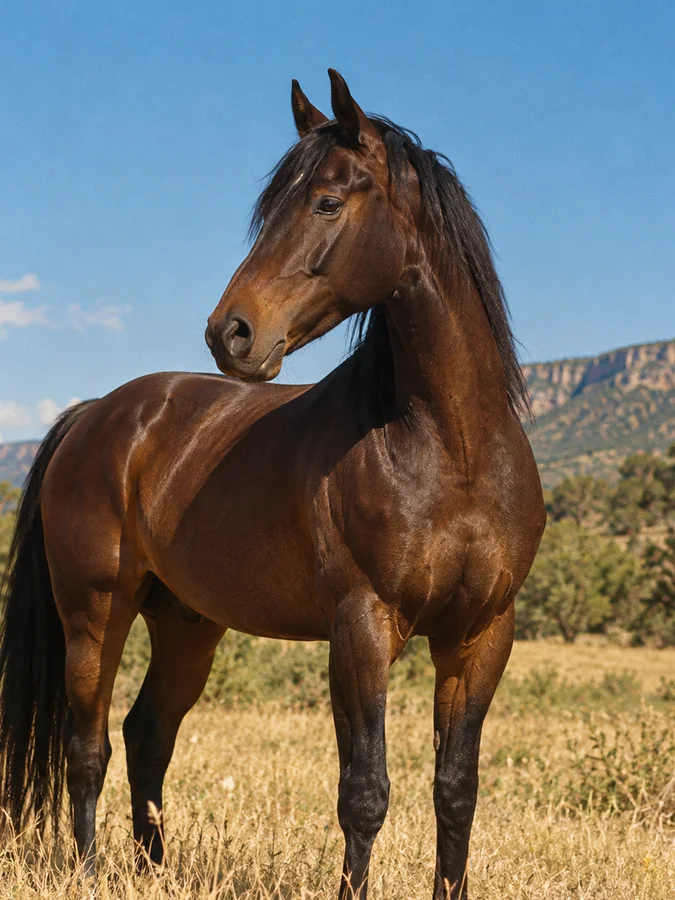
The single most important signal: a horse looks where their ears point.
For exampleEars pinned flat back against the neck are a clear threat or a sign of discomfort. One ear on you and one forward means the horse is listening to you and their surroundings.
Eyes
Shape, wrinkles above the eye and blink rate.
For exampleTightened, angled wrinkles above the eye and a strained look are part of the recognised horse pain face.
Mouth and nostrils
Tension in the lips, chin and nose.
For exampleA tight chin, clamped lips and tense nostrils can point to stress or pain. A loose, drooping lower lip usually means a deeply relaxed horse.
Head and neck
Height and tension of the carriage.
For exampleA high head on a tight neck means the horse is alert or worried. A low, relaxed neck usually means they feel at ease.
Tail
Clamping, swishing and flagging.
For exampleForceful, constant swishing when there are no flies often signals irritation or discomfort. A clamped tail can mean fear or pain.
Weight and stance
How a horse stands and where they carry their weight.
For exampleResting one hind hoof on its toe is normal relaxation, but repeatedly taking weight off a front leg can be a sign of pain.