Voice
Quacks, calls and more.
For examplePekin ducks use up to 16 different calls, and some calls differ between males and females.
Chatty, sociable and made for water, a flock animal who says far more than “quack.”
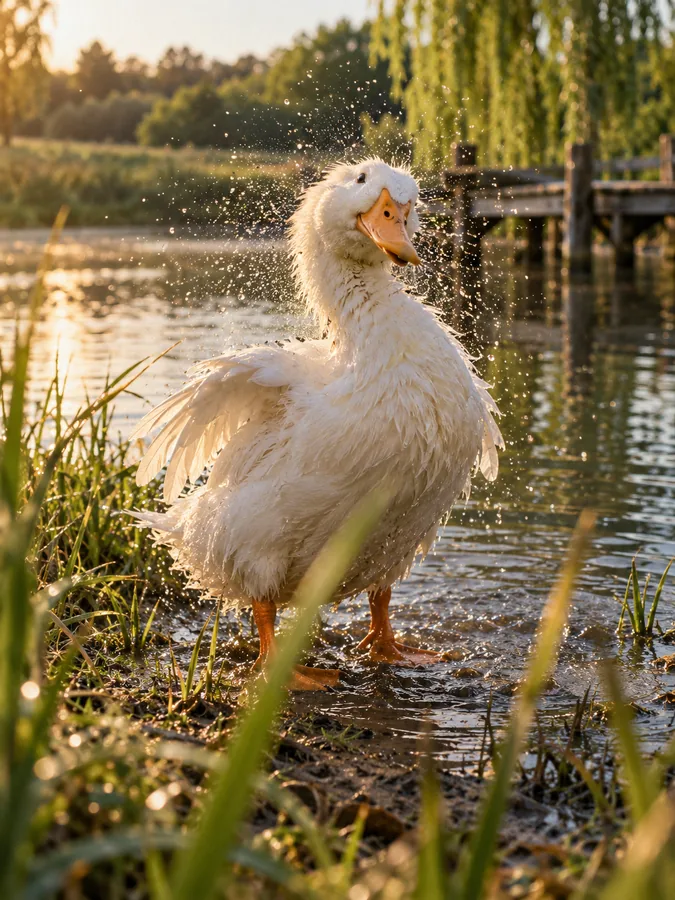
Domestic ducks, like the mallard-descended Pekin and the Muscovy, are waterfowl whose bodies and behaviour are built around water. They bathe, dip their heads and preen to keep their feathers, eyes and nostrils healthy.
They live in flocks, often do things together, and have a far richer vocal repertoire than most people expect. Duck research is still limited, especially for Muscovies, so FaunaVera tells you when its confidence is lower.
A few of the channels FaunaVera watches and listens to in every duck video, weighed together with context and checked against a duck-specific ethogram.
Quacks, calls and more.
For examplePekin ducks use up to 16 different calls, and some calls differ between males and females.
Dipping and splashing.
For exampleDucks with full-body water access head-dip and preen with water more than ducks with only a little.
Care and condition.
For exampleMore access to water goes with more wet preening, a core part of how ducks look after themselves.
Doing things together.
For exampleDucks often bathe at the same time as their flockmates, so they need room to do it together.
Panting.
For examplePanting goes up in warmer, more humid or stuffier conditions, so it is a useful comfort signal.
Choosing where to lay.
For exampleLaying ducks prefer loose material like sawdust, and blocking their preferred nest causes a stress response.
Give them water deep enough to dip their whole head and bathe, and keep them with their flock. A calm human presence can bring out a lot of conversation.
Upload a short video and FaunaVera reads the whole picture for you: an Interpretation, Voice of Animal, practical Tips and Ethogram Insights that explain exactly which signals it saw.
FaunaVera's duck ethogram draws on 37 science-backed references. Here are a handful of them.
Everyday moments, filmed at home, in the field and on the farm. Follow along for more @fauna.vera.