Ears
Position and movement.
For exampleEars pointing backwards are linked to negative states such as frustration. Ears pointing forward show the goat is focused on something.
Curious, clever and social, a browser that climbs, explores and tells you clearly when they have had enough.
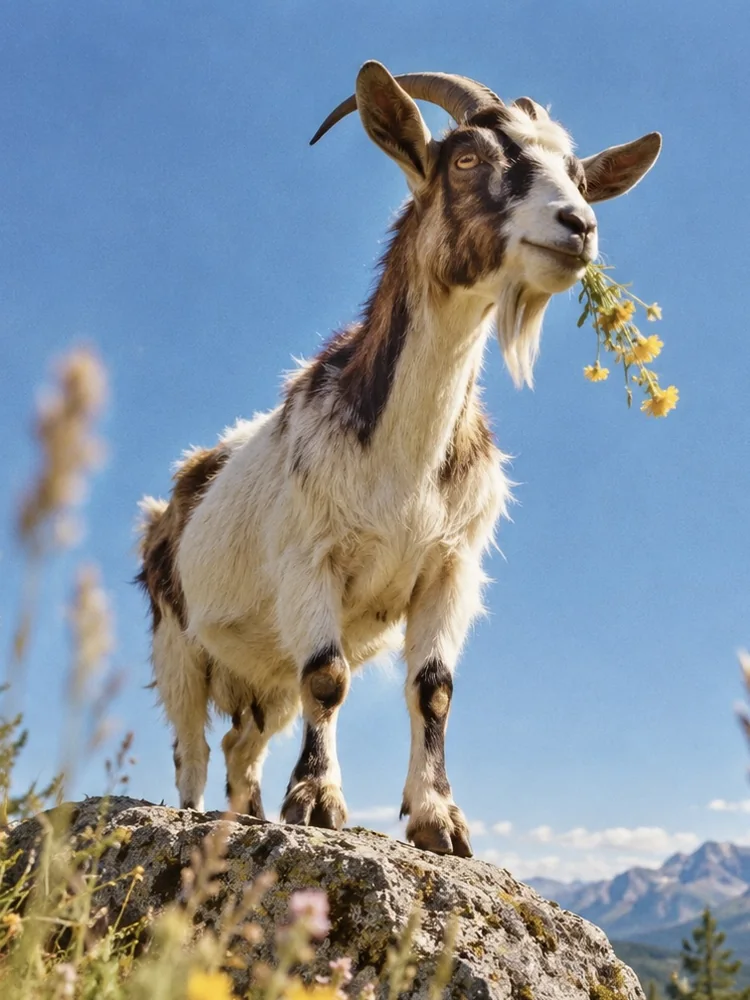
Goats are curious, clever and social. They are browsers and climbers, and they explore the world with their mouths, noses and very mobile ears.
They are also more attuned to people than many expect, looking to humans for help and even preferring happy faces to angry ones.
A few of the channels FaunaVera watches and listens to in every goat video, weighed together with context and checked against a goat-specific ethogram.
Position and movement.
For exampleEars pointing backwards are linked to negative states such as frustration. Ears pointing forward show the goat is focused on something.
Carriage, one of the clearest goat mood signals.
For exampleA tail held up is linked to positive situations. A tail held down can signal stress or discomfort.
Head posture, height and where the goat is facing.
For exampleA goat standing tall and facing you with their head up is usually curious. A lowered head with the chin tucked can be the start of a challenge.
Tension and expression.
For exampleA goat in pain may grind their teeth, hold their face tense and stop chewing their cud.
Distance, hierarchy and who stays together.
For exampleA goat that is repeatedly pushed away from the feeder or stands alone may be low-ranking or unwell.
Bleats, and what changes in them.
For exampleBleats tend to get more frequent and more varied in negative situations, such as being separated from the herd.
Stand calmly at the goat's side and let them come and sniff you. Goats are curious, so patience usually wins, and a calm, friendly face genuinely matters.
Upload a short video and FaunaVera reads the whole picture for you: an Interpretation, Voice of Animal, practical Tips and Ethogram Insights that explain exactly which signals it saw.
FaunaVera's goat ethogram draws on 45 science-backed references. Here are a handful of them.
Everyday moments, filmed at home, in the field and on the farm. Follow along for more @fauna.vera.