Ears
Direction and drop.
For exampleEars held down or back are scored as pain markers on the Donkey Grimace Scale.
Calm, careful and deeply loyal, a quiet thinker whose stillness can hide a lot.
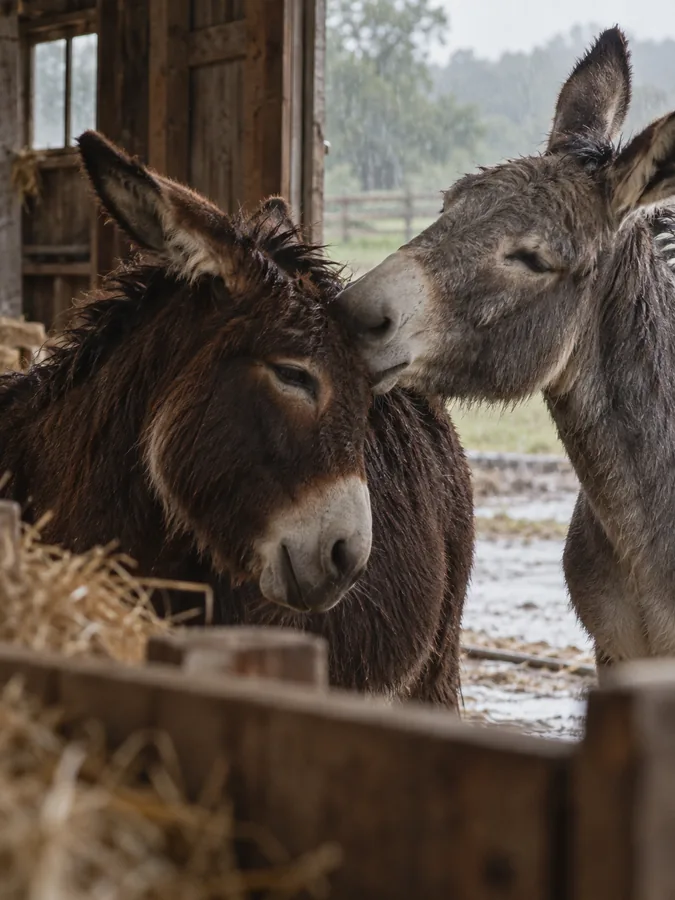
Donkeys are equids, but they are not small horses. When something worries them they tend to freeze and assess rather than run, which is why vets and ethologists call them stoic rather than stubborn.
They form strong, often lifelong bonds with particular companions. And because they show pain more subtly than horses, reading their faces and posture carefully matters a lot.
A few of the channels FaunaVera watches and listens to in every donkey video, weighed together with context and checked against a donkey-specific ethogram.
Direction and drop.
For exampleEars held down or back are scored as pain markers on the Donkey Grimace Scale.
Carriage and height.
For exampleHead carriage is one of the most consistent parts of a donkey's behaviour over time, so a change from their usual carriage is worth noticing.
Swishing and position.
For exampleTail swishing together with head shaking and foot stamping is most often about keeping flies away, not about you.
The donkey pain face.
For exampleTight eyes, tense nostrils and a tense muzzle are all part of validated donkey pain scales.
Freezing and dullness.
For exampleFreezing is a donkey's main response to threat, so a very still, quiet donkey may be masking pain or fear.
Pairs and companions.
For exampleMost donkeys have a preferred companion, and in choice tests they picked that companion over other donkeys.
Give them time to look and decide, and don’t rush them. Keep bonded pairs together, because their companion matters to them.
Upload a short video and FaunaVera reads the whole picture for you: an Interpretation, Voice of Animal, practical Tips and Ethogram Insights that explain exactly which signals it saw.
FaunaVera's donkey ethogram draws on 46 science-backed references. Here are a handful of them.
Everyday moments, filmed at home, in the field and on the farm. Follow along for more @fauna.vera.