Ears
Position and movement, where the breed allows.
For exampleEars pointing forward usually mean a pig is paying attention. Ears pulled back can signal fear or the start of a fight.
Clever, social and vocal, with a whole language of grunts most people never learn to hear.
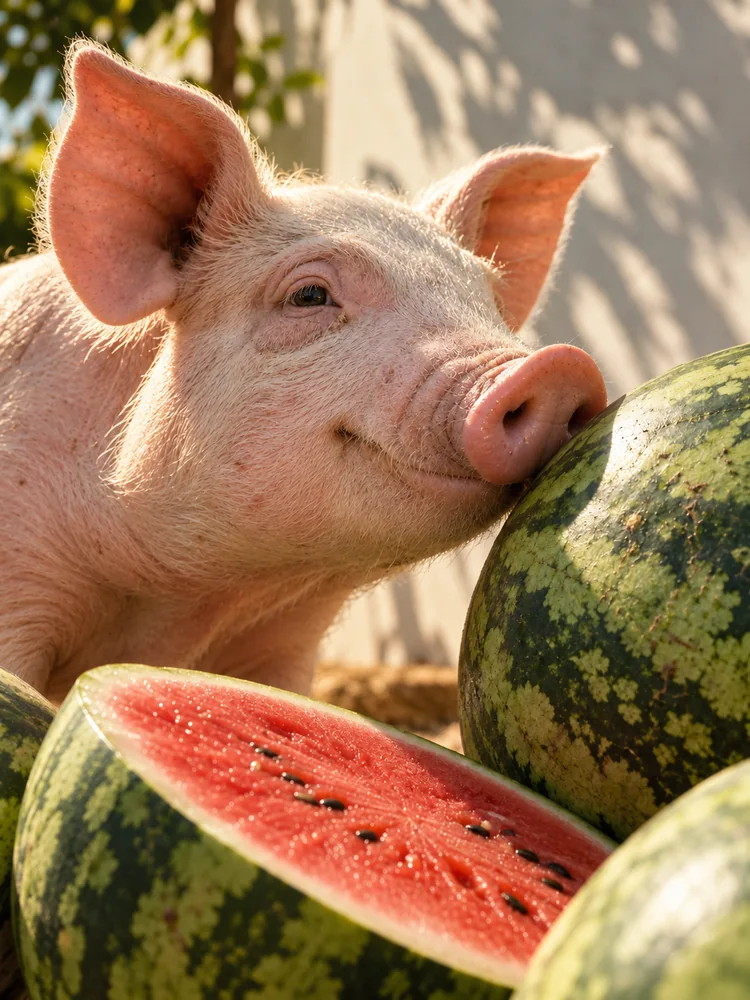
Pigs are clever, curious and very social. In the wild they live in small family groups, spend most of the day rooting and foraging, and keep up a near-constant conversation of grunts.
Most people never learn to read a pig, which is a shame, because they are some of the most expressive animals we share our lives with.
A few of the channels FaunaVera watches and listens to in every pig video, weighed together with context and checked against a pig-specific ethogram.
Position and movement, where the breed allows.
For exampleEars pointing forward usually mean a pig is paying attention. Ears pulled back can signal fear or the start of a fight.
Carriage and motion, one of the clearest mood signals a pig has.
For exampleA curled or wagging tail is generally linked to positive states. A tail hanging straight down or tucked can signal stress.
Expression, tension and where the nose is directed.
For exampleA pig rooting and sniffing around is engaged and exploring. A still snout with a fixed stare often means they are wary.
Posture, activity and how a pig lies.
For exampleLying stretched out on their side, often touching other pigs, usually means a relaxed pig. Lying on the belly with legs tucked under is a more alert position.
Who is near whom, and who is avoiding whom.
For exampleA pig that is repeatedly pushed away from food or lies apart from the group may be low-ranking, stressed or unwell.
Grunts, squeals and screams, and how long each one lasts.
For exampleShort, soft grunts are mostly contact calls. Long, high-pitched squeals and screams are linked to fear or pain.
Move slowly, speak calmly and let a pig investigate you on their own terms. Pigs remember how they have been handled and adjust to people accordingly.
Upload a short video and FaunaVera reads the whole picture for you: an Interpretation, Voice of Animal, practical Tips and Ethogram Insights that explain exactly which signals it saw.
FaunaVera's pig ethogram draws on 52 science-backed references. Here are a handful of them.
Everyday moments, filmed at home, in the field and on the farm. Follow along for more @fauna.vera.